It's the first question almost everyone asks, and it's a fair one. The honest answer is that it depends on what's being built, but "it depends" isn't much use when you're trying to set a budget. So below are the price ranges we typically see for UK custom software projects, with examples of what sits in each, followed by what moves a project up or down a band, and how to get a fixed figure before you've committed to anything.
Typical UK price ranges, with examples
These are the bands most projects fall into. They're indicative, not a quote: where a project lands depends on the things described further down, and every project gets its own fixed price once we understand it.
Simple tools and automations: £3,000 to £8,000 (typically 2 to 4 weeks). For example, a quote or invoice generator that builds documents from rates you set once, a connection that moves data between two systems you already pay for, or a simple internal dashboard for one team.
Business applications: £8,000 to £20,000 (typically 4 to 8 weeks). For example, a booking system with online payments for a single business, a customer or member portal, or an invoicing and reporting application that replaces a set of spreadsheets.
Platforms with several users and integrations: £20,000 to £40,000 (typically 8 to 14 weeks). For example, a club platform covering membership, bookings, payments, messaging and board reporting, or a clinic platform with several patient journeys, card payments and an integration with a regulated third-party system.
Complex and data-heavy systems: £40,000 to £80,000 and above (typically 3 to 6 months or more). For example, research and simulation engines, multi-sided portals with partner organisations, high-volume eCommerce integrations, or systems with strict compliance and audit requirements.
Ongoing hosting, support and further development are priced separately, usually as a modest monthly arrangement, and only if you want them. The software and its code are yours outright either way.
Why a range is only a starting point
Two projects can both be called a booking system and have almost nothing in common. One is a single calendar that takes a name and a time. The other is what we built for The Armstrong Clinic: four services with four different patient journeys, two diaries with a two-hour travel rule between them enforced by the database, slots held for thirty minutes until payment clears, clinical approval before certain treatments can be booked, and a separate portal for partner practices.
Same label, very different amounts of work: the first sits in the business applications band, the second in the platforms band. The rest of this article is about what decides which band a project lands in.
"A price given before the problem is understood is a guess with a pound sign in front of it."
What changes the cost: the people and journeys
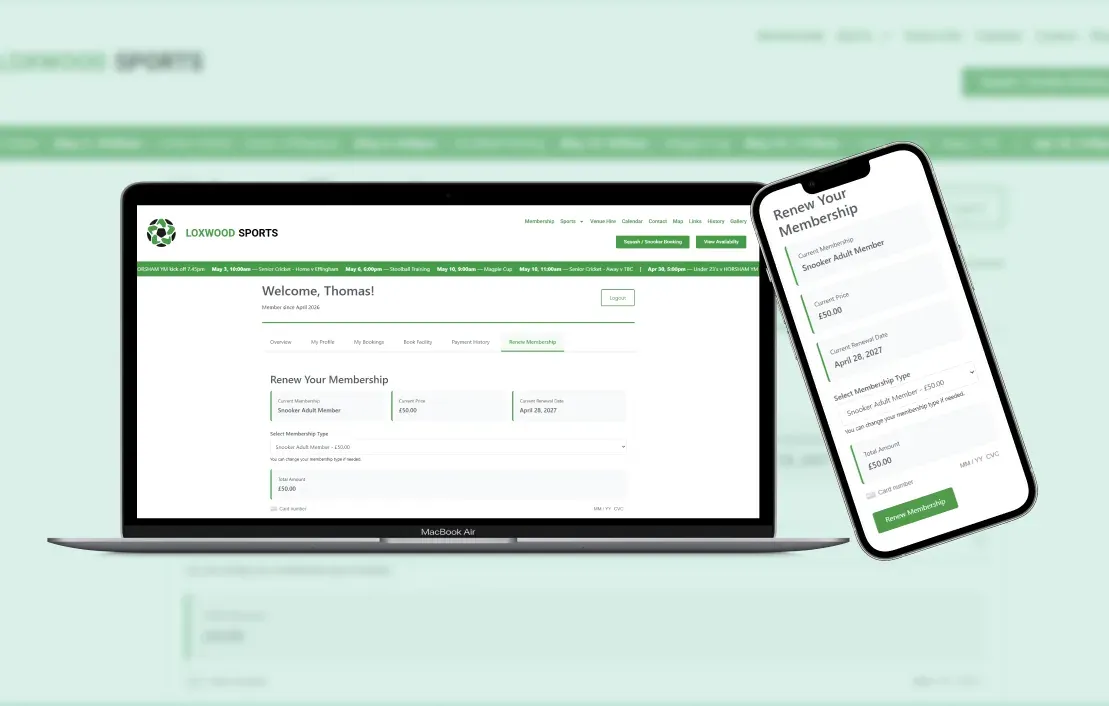
The biggest driver is how many different kinds of people use the system and how differently each of them moves through it. Every type of user brings its own screens, its own permissions and its own rules. The Armstrong Clinic has patients, a clinician running the admin and partner practices with their own portal. Loxwood Sports has members booking courts and paying online, and every director with their own admin login.
A tool used by one team for one job is a much smaller piece of work than a platform used by the public, your staff and your partners.
What changes the cost: the systems it has to talk to
Integrations are often where the real work is. Connecting to another system means understanding its data, handling the moments it's slow or unavailable, and keeping both sides in agreement. The Armstrong Clinic platform writes patient data straight into OxygenRX, a regulated prescribing platform, and takes payments through Stripe. For Ballongifts we built an API bridge that keeps orders, stock movement and tracking in sync with the fulfilment partner in real time.
Each connection adds effort. It's usually still cheaper than rebuilding what the other system already does well.
What changes the cost: the rules that have to hold
Some rules are nice to have. Others must never be broken: two patients can't win the same slot, a booking can't exist until it's paid for, a figure on a report must match the invoice it came from. Rules like that have to be enforced where they can't be bypassed and tested so they stay that way. The Armstrong Clinic platform has 182 automated tests guarding its booking, eligibility and payment rules.
The more there is riding on the rules, the more of the work goes into making sure they hold.
What changes the cost: how much it replaces, and what it produces
Loxwood Sports replaced three systems with one platform, which meant one build had to cover membership, payments, bookings, communications and eighteen board reports. Classic Towing needed branded invoices and formal insurance reports laid out exactly as the business wanted them seen. Reports, generated documents and exports all take time to get right, because they're what other people read.
Then there's what happens after launch: hosting, security, backups, monitoring and further development. For Loxwood we run all of that, because a volunteer board shouldn't have to.
How to get a fixed price before you commit
This is what our method is for. Discovery comes first and costs nothing: we sit down with you before anything is agreed and before you've spent a penny, and learn how the business actually runs, what's getting in the way and what finished looks like.
Then we write a plan you can read: the feature set, the security model, how people will use it and what it connects to. We present it, refine it with you until nothing is left open to interpretation, and you get a defined scope and a fixed quote before any development starts. You know what's being built, to what standard, in what order and for how much, before you commit.
During the build you see the work at staged reviews rather than at the end, so any correction is made while it's still small and cheap.
Ways to keep the cost in proportion
Start with the job that costs you the most time today: a focused first version often sits a band lower than the full wish list, and the rest can follow once it's earning its keep. Connect the tools that already work rather than replacing them. Be clear about which rules are essential and which are preferences. And be wary of any quote that arrives before anyone has asked how your business works: either it has padding built in to cover what they don't know, or it will grow once they find out.
If you're still deciding whether building is right at all, our article on the signs you've outgrown off-the-shelf software is a good place to start.
Custom software cost: quick answers
How much does custom software cost in the UK? Most UK custom software projects fall somewhere between £3,000 and £80,000. Simple tools and automations typically cost £3,000 to £8,000, business applications £8,000 to £20,000, platforms with several users and integrations £20,000 to £40,000, and complex, data-heavy systems £40,000 to £80,000 and above. Your fixed price is set after a free discovery stage, before any development starts.
How long does custom software take to build? Simple tools typically take 2 to 4 weeks, business applications 4 to 8 weeks, and larger platforms 8 to 14 weeks. Complex systems can take 3 to 6 months or more. The timeline for your project is set in the written plan before the build begins.
Is custom software cheaper than paying for off-the-shelf subscriptions? Sometimes. A build costs more up front, but there are no per-user or per-member fees and you own it outright. Loxwood Sports, for example, handed £281 a year in software subscriptions back to the club by replacing three tools with one platform it owns. Where a ready-made product already does the job, buying it is usually the better answer.
Can I get a fixed price for custom software? Yes. Discovery is free, and it ends with a written scope and a fixed quote, so you know what is being built, in what order and for how much before you commit.
The quickest way to find out what your project would cost is to tell us about it. The first conversation is free, and you'll get a straight answer about whether we're the right fit. See what we build on our custom software development page.
Start the conversation →